2026 Forum Highlights

Global Study on the Use of AI in Negotiation
Examining current use of AI in negotiation, mediation and diplomacy based on the results of a global survey on AI in negotiation.
Agenda-Setting Roundtables
Crafting agendas for the research and development of AI tools, building the capacity of negotiators to use AI, and managing AI risks in negotiation from practitioners' perspectives.
Live Demonstrations of AI Negotiation Platforms
Introducing the latest developments in AI modelling of complex negotiations, easy-to-use interfaces and insights into future technological innovations.
Practitioners' Focus Groups
Opening a safe space to engage with other practitioners to discuss current use, expectations and concerns regarding the implementation of AI in negotiation.

Global Study on the Use of AI in Negotiation
Examining current use of AI in negotiation, mediation and diplomacy based on the results of a global survey on AI in negotiation.
Agenda-Setting Roundtables
Crafting agendas for the research and development of AI tools, building the capacity of negotiators to use AI, and managing AI risks in negotiation from practitioners' perspectives.
Live Demonstrations of AI Negotiation Platforms
Introducing the latest developments in AI modelling of complex negotiations, easy-to-use interfaces and insights into future technological innovations.
Practitioners' Focus Groups
Opening a safe space to engage with other practitioners to discuss current use, expectations and concerns regarding the implementation of AI in negotiation.

Welcome & Opening Remarks
11 January 2026, 7h45 Boston time/ 12h45 GMT

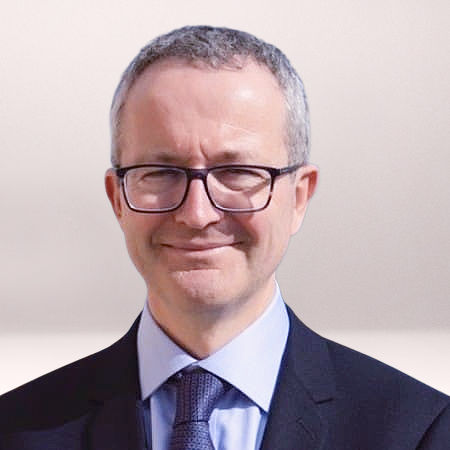
Peter Maurer
President
Basel Institute on Governance
Peter Maurer is a Swiss diplomat who served as President of the International Committee of the Red Cross (ICRC) from 2012 to 2022. Before leading the ICRC, he was Switzerland’s State Secretary for Foreign Affairs (2010–2012) and previously served as Swiss Ambassador to the United Nations in New York (2004–2010).

Mike VanRooyen
Director
Harvard Humanitarian Initiative
Michael VanRooyen, MD, MPH is a global leader in humanitarian response and emergency medicine. He is Chair of Emergency Medicine at Massachusetts General Hospital and Brigham and Women’s Hospital, Enterprise Chief of Emergency Medicine for Mass General Brigham, and a professor at Harvard Medical School and the Harvard T.H. Chan School of Public Health.

Claude Bruderlein
Director
Frontline Associates
Claude Bruderlein is a humanitarian negotiation expert and educator with over 30 year. He is the lead author of the first Manual on Frontline Humanitarian Negotiation and the founder of both the Centre of Competence on Humanitarian Negotiation and Frontline Associates, advancing practice and AI-assisted negotiation globally.
2026 Forum Highlights
Roundtables Agenda
11 January 2026 - All time in EST/GMT
Roundtable 1 – Research & Technology
Advancing next-generation systems for safe and reliable AI-supported negotiation
08:00–09:00 EST / 13:00–14:00 GMT

Moderator
Zilin Ma PhD
Postdoctoral Researcher
Digital Data Design (D^3) Institute at Harvard

Usmaan Ahmad
CEO & Co-Founder, Expeditionary
AI Architecture for Complex Negotiations: From Individual Augmentation to Collective Intelligence

Usmaan Ahmad has spent over two decades advising leaders on complex negotiations across private and public sectors - from Fortune 100 M&A and energy infrastructure deals to peace processes. He has led crisis response and expeditionary diplomacy initiatives in some of the world's most challenging environments. Today, as Co-Founder and CEO of Expeditionary, he leads a team of veteran negotiators, intelligence professionals, and AI technologists building a Human × AI negotiation operating system and platform. Expeditionary is an applied AI research, product, and advisory company partnering with the world's most ambitious enterprises to transform how they navigate complex, high-stakes negotiations through the convergence of human expertise and artificial intelligence.

Yadvinder S. Rana
Professor of Cross-Cultural Negotiation; Founder, NegoAI
Prescriptive Agent Scaffolding for Reliable AI Negotiation Support

Yadvinder Rana holds a Doctorate in Business Administration in Cross-Border M&A negotiations from Edinburgh Business School, an MBA from Manchester Business School, and a master’s degree in mechanical engineering from Turin Polytechnic. He combines academic research with practice by building customized AI negotiation agents aimed at improving fairness and efficiency in negotiations. Yadvinder serves as Professor of Cross-Cultural Negotiation at the Catholic University in Milan. Between 2004 and 2010, he was Africa, Asia & Pacific Sales Director for a global leader in the luxury goods sector. From 1997 to 2003, he worked for Fiat Group in the US, UK and France, leading PMI teams.

Przemysław Kępczyński
PhD Candidate
Polish Academy of Sciences
Mediator- centric Model AI Architecture for Diplomatic Negotiations

Lawyer, mediator, and computer engineer operating at the intersection of technology and law. His engineering research focused on neural networks, providing deep technical foundations for his legal and dispute resolution practice. Specializes in applying game theory, economic analysis of law, and contract theory to negotiation and mediation processes. Member of IGN Zurich. Combines analytical precision with practical problem-solving, pursuing strategic outcomes grounded in behavioral and economic frameworks.

Aneta Napieralska
Attorney
Mediator- centric Model AI Architecture for Diplomatic Negotiations

Aneta Napieralska is an attorney and mediator with international affiliations, including membership in the Institute for Global Negotiation in Zurich. Her practice is grounded in contract theory, game theory, and law & economics, enabling strategic navigation of complex cross-border transactions. With hands-on experience in technology law, AI, and FinTech, she brings a unique perspective on deploying innovation in regulated environments. As a mediator in high-stakes commercial disputes, she applies game-theoretic tools to reach durable agreements—expertise directly relevant to responsible AI-assisted negotiation practices.

Hong Zhang
Postdoctoral Researcher, Leuphana University Lüneburg
AI in the Age of Complex Negotiation: A Human–AI Integrated Perspective

Dr. Hong Zhang is a behavioral scientist specializing in complex negotiation, commercial decision-making, and value creation in buyer–seller relationships. Her research examines how economic, social, environmental, and technological challenges shape negotiation and business development outcomes. Her pedagogy integrates behavioral science with experiential learning to equip future professionals with analytical, relational, and responsible decision-making skills.

Cornelia C. Walther
Senior Fellow
Founder Hi@Hub
ProSocial AI. What it is and why it matters

Cornelia C. Walther is a humanitarian leader with 20+ years at the UN, driving social change. Now at the University of Pennsylvania/Wharton as a Fellow, she pioneers research on hybrid intelligence and prosocial AI through the global POZE alliance to build ‘Agency amid AI for All.’ Cornelia is currently working with the Sunway Planetary Health Center on Prosocial AI in Malaysia and UNFPA in Morocco. She is a contributor on Forbes and Psychology Today. Her new book AI4IA appears in Jan 2025.
Roundtable 2 – Empowering Negotiators & Capacity Building
Skills, training models, and human–AI collaboration in negotiation practice
09:00–10:00 EST / 14:00–15:00 GMT

Moderator
Francesco Marchi
Director of Negotiation Expertise at ALTERNEGO, LecturerSciences Po (Paris), College of Europe (Bruges) and University Paris 1 Sorbonne-Panthéon.

Leonardo Caporarello
Professor of Practice of Negotiation and Leadership, SDA Bocconi
Negotiation in the Age of AI: The Human Leadership

Leonardo Caporarello is Associate Dean for Online Learning and Professor of Leadership and Negotiation Practice at SDA Bocconi School of Management, where he also serves as Rector’s Delegate for Digital Learning and Director of BUILT, Bocconi’s center for innovation in teaching and learning. His work focuses on negotiation, leadership, and the human-centered use of digital and AI technologies in education. An internationally active educator and researcher, he has taught and held visiting appointments across Europe, Asia, and the United States, and has authored and edited multiple recent publications on negotiation, AI in education, and responsible digital transformation.

Vera Hampel
Principal
Egger Philips
Human-Centered Capacity Building in AI-Enabled Negotiation Training

Dr. Vera Hampel is Principal at Egger, Philips & Partner in Zurich, a licensed negotiation consultancy based on the Harvard Concept. She holds a Ph.D. in leadership research from the University of Zurich and is trained in systemic consulting and therapy. Vera brings psychological insight into negotiation, mediation, and leadership development, with a focus on emotional intelligence. She supports leaders and organizations through workshops, coaching, and tailored interventions that bridge academic depth with practical relevance.

Valon Murtezaj
Professor of International Negotiation - IESEG School of Management
The use of AI in Diplomatic Negotiations

Dr. Valon MURTEZAJ is a professor of international negotiation, diplomacy and conflict management at the IÉSEG School of Management in Paris, France. His teaching specialties and research interests include negotiation, conflict, diplomacy, and leadership. Professor MURTEZAJ has also gained extensive professional experience working in various capacities with international organizations and holding senior leadership positions within the Government of the Republic of Kosovo. In recognition of his distinguished contributions to both professional and university activities, Dr. MURTEZAJ was awarded the Officer of the National Order of Merit by the President of the French Republic. Additionally, for his outstanding achievements and successful career, the Diplomatic Academy of Vienna inducted him into its Alumni Hall of Fame."

Saloni Shukla
United Nations Fellow and Emerging Leader 2025
The Neoteric Diplomat in the Age of AI

Saloni Shukla is GDI Fellow – Fall 2025 Cohort and Emerging Leader from the UNITAR Women’s Leadership for Peace Programme. I work at the intersection of AI, blockchain, human-machine interaction, and digital governance—with expertise in Media and Communication, Emerging Technologies , AI & Professional Skills, Blockchain for SDGs, and Leading in the AI Revolution. I currently serve as the Asia-Pacific Representative on the Digital Technologies Standing Committee at CILECT, and I’m also a member of C2PA (Coalition for Content Provenance and Authenticity) , Founder of Nova Ethos an emerging tehcnologies and Applied AI advisory , consultancy and agency and a Professor and researcher ."

Jan Smolinski
Founder & CEO of Discurso.AI
Who is the better negotiation judge, human or AI?

Discurso.AI is an ethical, academically grounded negotiation learning platform designed to make high-quality education accessible to all. Built with generative AI, it helps students, educators, and universities practice and teach negotiations, receive and give structured feedback, and measure skill development using validated metrics. Our AI coach can also give personalized tricks and learning recommendations to learners. Even with a rigorous scientific grounding, Discurso.AI aims to be fun to use. We operate with a clear social mission: supporting learning, inclusion, and fair access. Our approach prioritizes transparency, evidence-based pedagogy, and European values around data protection, fairness, and digital responsibility.
Roundtable 3 – Managing Cognitive, Ethical & Institutional Risks
Human oversight, de-skilling, legitimacy, safety, and governance of AI in negotiation
10:00–11:00 EST / 15:00–16:00 GMT

Moderator
Annie Chaloux
Associate professor, Université de Sherbrooke, holder of the Quebec Research Chair in Climate Scientific Diplomacy.

Ugne Fink-Jensen
Managing Partner, Negotiation & Tech Counsel @ Firm&Fair
The Invisible Risks of AI in Negotiations

Ugne Fink-Jensen is an international business negotiator, tech lawyer, and speaker with 15+ years of experience. Through Firm&Fair, she advises businesses on strategic deals and delivers sessions on negotiation excellence and the advantage of human skills in a technology-driven world. Previously, she was Lead Negotiator and Senior Group Counsel at a multibillion-dollar conglomerate, leading complex negotiations for digital transformation. Ugne holds an LL.M. from Stockholm University and executive credentials from Harvard, Cambridge, Oxford, and INSEAD.

Emily Knowles
Project Manager, Consultant
Applying Cultural Mapping to AI-Enabled Negotiation

Emily is a Project Manager bridging research and policy on AI, negotiations, and international relations. Bringing a decade of program design and delivery across the UN, private sector, and NGOs, from counterterrorism to climate adaptation and foresight, her work centers on ensuring AI systems support underserved communities and are governed responsibly and ethically. Skilled at translating complexity into coherent policy and implementable programs that strengthen public institutions and enable equitable, real‑world outcomes, she is currently focussing on AI for climate foresight and AI-enabled Mental Health and Psychosocial Support services.

Abdel Rahman Alzorgan
Public Information Assistant, Office of the UN Special Envoy for Yemen
A Governance Framework for AI in Conflict Mediation: Where the Machine Stops

Abdel Rahman Alzorgan is a Jordan-based Politics and International Relations professional working as a Public Information Assistant with the UN Office of the Special Envoy of the Secretary-General for Yemen. He combines strategic communications and digital diplomacy with a passion for technology and open-source intelligence analysis, and enjoys monitoring information environments and mis/disinformation that affect peace efforts. Abdel Rahman is particularly interested in how AI and digital tools can support more inclusive, evidence-based negotiation and mediation.

Tea Mustac
Head of Operations at Institute for Global Negotiation
The Hidden Cost of Efficiency

Tea Mustać is an LL.M. candidate at Harvard Law School, currently on leave from her role as Head of Operations at the Institute for Global Negotiations. She works at the intersection of AI governance and data protection, helping organizations turn abstract regulation into practical action. Tea co-hosts RegInt: Decoding AI Regulation and co-authored The AI Act Compact. Her work has been recognized with the European Young Lawyers Award and the My Data Is Mine Award. She’s spoken at global events including Web Summit and Dublin Tech Summit, and regularly leads workshops on AI, tech policy, and leadership.

Dariha Erketaeva
Negotiation Specialist, FATC
The Cognitive Costs and Benefits of AI for Frontlne Negotiators

Dariha Erketaeva is a negotiation specialist at the Frontline Associates Training Center (FATC), with expertise in applied AI models for crisis negotiation and learning design. Before transitioning into negotiation work in 2019, she spent a decade leading humanitarian operations with MSF and DanChurchAid across conflict-affected regions in the Middle East, Africa, and Central Asia. She later joined the Centre of Competence on Humanitarian Negotiation (CCHN) in Geneva, where she contributed to advancing frontline negotiation as a professional domain. With a background in psychology and neurosciences, she brings a multidisciplinary approach to negotiation and capacity building.
Roundtable 4 – AI, Meaning & Power
How AI reshapes narrative authority, representation, and political legitimacy
11:00–12:00 EST / 16:00–17:00 GMT

Moderator
Delphine Alles PhD
Professor of Political Sciences
Vice-President INALCO
Scientific Director DÉCRIPT

Charles Tenenbaum
Associate Professor of Political Science, Sciences Po Lille
Algorithms and the Shaping of Complex Negotiation Processes: the Case of Digital Peacebuilding

Charles TENENBAUM is Associate Professor of Political Science at Sciences Po Lille and Director of the Master’s Program in Peace, Humanitarian Action and Development. He holds a PhD in Political Science, and his research focuses on international mediation and negotiation, multilateralism, and the role of religious actors in conflict resolution. Charles Tenenbaum has taken part in several peacebuilding programs in conflict zones, supporting mediation and interreligious dialogue.

Iris Poiré-Hernandez
Dual Master’s student, Sciences Po & Centrale Lille
Algorithms and the Shaping of Complex Negotiation Processes: the Case of Digital Peacebuilding

Iris Poiré Hernandez is a final-year student in the Digital Societies dual master’s program between Sciences Po and Centrale Lille, where she examines the intersection of technology and society. Her research thesis explores the impact of digital innovations on mediators and peacebuilders, with a focus on how technology reshapes professional practices and frameworks. Passionate about digital diplomacy, she investigates how emerging technologies influence international relations, governance, and conflict resolution, advocating for inclusive and transparent approaches to global digital challenges.

Bahar Sercin Halefoglu
CEO & Founder of ALSE Data
Reframing AI’s Role in Institutional Negotiation

Bahar Sercin Halefoglu is an engineer working in AI & data for over 13 years, the Founder & CEO of ALSE Data, and serves as Deputy Secretary General of the AI Policy Association TR and AI Diplomacy Council which organizes policy-driven events with embassies and institutions such as the OECD. After working at L’Oréal and Bayer, she launched her own AI company to support responsible, human-centered decision-making. She writes for HBR and Inc. Magazine TR, mentors tech careers, and was selected for the Rising Women Leaders in AI program (UK).

Louise Beaumais
Postdoc for the DECRIPT / INALCO, CESSMA
Beyond Technological Optimism: Indigenous' Peoples Contestations of AI

Louise Beaumais holds a PhD in Political Science (International Relations). Her work focuses on how knowledge is constructed, legitimised and circulated. In recent years, she has become interested in the use of figures and data on conflicts by various practitioners, including humanitarian workers, journalists, military personnel, and diplomats. For her thesis, entitled "On the Use of Numbers in Foreign Policy: From Datafication to Datafiction, Lessons from French and British Arctic policies", she focused on legitimate knowledge and its effects on representations in French and British Arctic policies.

Martin Wählisch
Associate Professor, University of Birmingham
Reasoning with Machines? The Power and Pitfalls of AI in High-Stakes Negotiations

Dr Martin Wählisch is Associate Professor in Transformative Technologies, Innovation and Global Affairs at the University of Birmingham, member of the Centre of AI in Government (CIAG) and Government Technology Lead at the Institute for Data and AI (IDAI), Birmingham.

Important Dates
1 September 2025 - Contribution Submission Opens
The submission period opens on 1 September 2025. Interested contributors are invited to submit a short summary of their proposed contribution. To start your submission, visit the Forum Online Portal.
20 November 2025 - Contribution Submission Closes
Deadline for submitting the outline and executive summary of the concept papers.
30 November 2025- Selection of Contributions
All contributors will be informed of the status of their application.
12 December 2025 - Audio Submission
All contributors are invited to submit a 2 - 3 minute audio file (MP3) outlining their contrbution.
10 - 11 January 2026 - AI Negotiation Forum Online
10 January 2026 – Practitioner exchanges and interviews.
11 January 2026 – Roundtables and panels with researchers, experts, and practitioners.
Co-organised by:


Meet the AI Negotiation
Developers and Practitioners
Explore Real-World Practice
See how AI is already being used in negotiation, mediation, and diplomacy.
Meet the Builders
Engage directly with teams developing AI tools, platforms, and methods.

From Ideas to Application
Discover concrete projects and field experiences beyond theory.
Choose Your Path
Move freely between breakout rooms and follow the work that matters to you.
Participants will have multiple opportunities to engage directly with presenters through the Innovation Exchange Sessions, which run throughout the Forum in four 30-minute rounds. During each round, contributors host dedicated breakout rooms where participants can join freely to explore platforms, projects, and real-world AI negotiation experiences.

Innovation Exchange Presenters


Shawn Guttman
Founder and CEO, Didi For Peace
Traffic Light for Peace:
Combining AI and Ripeness Theory
Web: didi4peace.ai


Yavinder Rana
Founder, NegoAI
Prescriptive Agent Scaffolding for Reliable AI Negotiation Support
Web: negoai.ai


Bartel Van de Walle
Founder, CASi Labs
AI-generated workspaces for negotiators: Structured Dialogue Meets System Simulation
Web: CASi Labs


Maya Ben Dror
Co-Founder COO, Complex Chaos
Helping Humanity Cooperate
at Scale
Web: complexchaos.ai


Jan Smolinski
Founder and CEO, Discurso.ai
AI Negotiation Training Platform for Practitioners
Web: discurso.ai


Bahar Sercin Halefoglu
CEO & Founder of ALSE Data
Reframing AI’s Role in Institutional Negotiation
Web: alsedata.com


Jérôme Crettol
Founder and CEO, DiploTools
Redesigning Reporting for Diplomats: PowerTranscript
Web: diplotools.com


Monica Gavriluta
Political Officer, UN Climate Change Secretariat
AI in process and humans in power
Web: unfccc.int


Yannik Sassmann BMZ Data Lab
Robin Nowok GIZ Data Lab
Essa Mohamedali, GIZ AI Advisor In East Africa
How AI Tools Can Improve Multilateral Negotiation Capacity
Web: https://www.negotiate-ai.com/landing-page
Web: negotiatecop.org


Adam Farquhar
Research Associate and Data Officer
University of Edinburgh Law School
AI-Powered Analysis of Peace Agreements: The PA-X Peace Agreement Database
Web: peaceagreements.org


Jonathan Harding Daramy
National Focal Point Leader at Global Call - Sierra Leone and IGN Climate Program Mentor
Harnessing Artificial Intelligence to Strengthen Climate Negotiation and Diplomacy in Emerging Economies
Web: global-negotiation.org


Habib Chamoun, Adjunct Prof. Sever Institute Washington University and Texas A&M Kingsville, Professor of Practice teaching negotiation at the UT Austin McKetta Department of Chemical Engineering.
DouDou Sidibé, Associate Professor at ESIEE Paris/Gustave Eiffel University Paris
The Integration of AI Tools in Negotiation Education: Enhancing Student Engagement and Learning Outcomes


Shane Ray Martin
Investor, B Ventures
3 Tech Companies Making Peace Profitable with B Ventures
Web: bventuresgroup.com


Ali Shafagh
Former Iranian Diplomat - Independent Researcher
Smart Hybrid Diplomacy (SHD): Reducing Deadlock and Cost in Multilateral Negotiations


Oana Ichim, PhD
Legal Knowledge Engineer, non-resident Fellow at TUM
Breaking AI's Single-Answer Paradigm


Shezaad Dastoor
Program Manager, Digital Transformation of UN Peacekeeping
MandateSim: Training Peacekeeping Leadership Through
AI-Driven Strategic Simulation
Web: chatgpt.com


Zilin Ma PhD
Postdoctoral Researcher
Digital Data Design (D^3) Institute at Harvard
Designing AI for Context Analysis in Humanitarian Frontline Negotiations
Web: iis.seas.harvard.edu


Gianclaudio Floria, CEO Conversity
Chirag Maheshwari, CTO Conversity
Sourabh Singh Chandel, Data Science Manager
Conversity: The Next Generation AI Negotiation Trainer
Web: conversity.ai
Web: pharmsight.com


Suzi Jazmati
FATC Community Manager and FATC Team
Crafting a Community
of AI Negotiation Professionals
Web: ai-negotiation-challenge.org


A collaboration between: